
Now You Know the Rest of the Story A Biographical Memoir M
In the beginning...
Prologue
The Part He Was Told Not to Play
At an early school concert, Michael Van Allen gave a performance his parents could see but could not hear.
He held his clarinet, moved his fingers, and followed the music director’s instruction not to blow into it. Around him, his classmates played. In the audience, his parents watched proudly, unaware that their son’s contribution was silence.
Years later, Michael would remember the moment with the clarity reserved for certain childhood embarrassments. It could be made funny in the telling. He had, after all, managed to perform without risking a single wrong note. But the humor came later. At the time, he had wanted to belong.
His grandfather, Cecil X. Scott, had played clarinet and tenor saxophone professionally. The family’s music reached back still farther, to a great-grandfather’s violin, and continued through uncles and siblings. Michael had entered that inheritance with a child’s reasonable hope: perhaps there would be a place for him too.
Instead, he learned how to look like a musician while withholding the very thing that made him one.
He would not qualify for the high-school marching band. Other doors would close as well. A swimmer with no school swim team, a teenager who failed to make the basketball and football teams, he began looking beyond the places where he had expected to find himself.
He found a pharmacy counter, a martial-arts school, books, and eventually a laboratory. He washed dishes to help pay for another attempt at college. He became a biochemist, a teacher, an administrator, and an advocate for people whose opportunities had been restricted before anyone had tested their ability.
Those achievements did not make his life invulnerable. He would lose Laverne, the young woman who had first made him forget to ring up a sale. He would discover the limits of public office and leave a doctorate unfinished. He would have to distinguish persistence from the habit of remaining forever in a struggle that no longer deserved all his time.
He could be impatient, irreverent, vain about a handsome car, and delighted by a joke that a more dignified man might have kept to himself. His story would be less believable without those qualities. He was not born admirable. Like most people, he had to work at becoming someone he could respect, and he did not get it right every day.
His father, Sonny, remained his example. His mother, Sarah, remained the woman who believed he deserved a chance. Friends, teachers, colleagues, and conductors would help him in ways no account of individual determination should erase.
And Debbie would become the person with whom the life he had built could turn into a life they shared.
Decades after that school concert, Michael returned to the clarinet. Later came a tenor saxophone, rehearsals, adult music camp, and performances in which his contribution could finally be heard. Learning was sometimes awkward. He continued anyway.
The satisfaction was larger than making the band. He had discovered that an old disappointment did not have to keep deciding what he was allowed to try.
“I want to die young as late as possible,” he liked to say.
The line carried his humor and something of his resolve. There were still books to read, places to see, people to love, and music to learn. He intended to remain available to them.
To understand how he arrived there, however, the story must begin before his first breath: with the family that gave him his name, the country that placed obstacles in its path, and the music that kept passing from one generation to the next.
Chapter 1
Before the First Note
1873–1922
Before Michael Van Allen had a name, his family had a sound.
There was a violin in the story long before there was a saxophone. Albert Tam Scott, his maternal great-grandfather, was born in 1873, eight years after the Thirteenth Amendment abolished slavery, with its exception for punishment following criminal conviction. In the family’s account, Albert was the first American-born member of his branch of the family. He entered the world free, though the country around him was still deciding how much freedom it would permit people of his color to exercise.
He played the violin. That fact survived him. Across the generations, it became part of the family’s understanding of itself: whatever work the world required of them, there would also be music.
In 1899, Michael’s paternal grandparents, Morton C. Van Allen Sr. and Ella Lowery-Johnson, were born. Morton would earn his living as a chauffeur; Ella was a skilled seamstress. Eventually they made their home in the Bronx, where work, marriage, and the raising of children demanded more immediate attention than any future family chronicler could quite capture.
Morton was an atheist. Ella was Catholic. Their grandson would inherit a family in which religious conviction was common but disbelief had a place at the table. His skepticism would have ancestors, just as his music did.
On the maternal side, Cecil X. Scott and Nina Evans-Stewart were born in November 1905. They came from the same town and, according to family recollection, knew one another from childhood. Their lives would remain intertwined through marriage, an enormous household, and the uncertain living of a working musician.
Cecil took up the clarinet and tenor saxophone. His brother Lloyd played drums. In their youth, the brothers began making music together, developing the partnership that would take them east from Ohio toward Pittsburgh and eventually New York.
In 1922, Morton and Ella welcomed a son, Morton Curtis Van Allen Jr. He would become Sonny to the people who loved him. Eight years later came his brother Melvin.
Sonny had no reason to know that the boy he would someday raise would spend much of his life trying to reconcile the two great demands of this inheritance: make something of yourself, and remember where you came from.
Chapter 2
A Bandstand and a Breadwinner
The 1920s–1940s
Cecil and Lloyd Scott found their way to Harlem, where music was a livelihood, a competitive sport, and sometimes a precarious bargain with the rent.
The Savoy Ballroom offered a coveted engagement. For musicians, appearing there meant entering a world in which dancers could judge a band as decisively as any critic. A weak rhythm section could not hide behind an impressive name. The floor supplied its own review.
Cecil’s career brought him into the company of musicians whose recordings would outlast the rooms in which they played. He performed and recorded with major figures of the jazz era, including Billie Holiday, and worked in ensembles that linked him to a broad network of celebrated players. Yet the famous names tell only part of the story. A working musician also needed endurance: the ability to keep finding work, keep learning the repertoire, and keep playing when applause had become groceries.
A serious injury interrupted Cecil’s career in the early 1930s. In the family’s account, the loss of a leg shook more than his mobility. Nina helped restore his confidence. His return to performing belonged to both of them, even if only one name appeared on the bandstand.
Their family grew to thirteen children. Sarah, the eldest, would become Michael’s mother. Behind her came Betty, Connie, Norma Jean, Loraine, Carol, Elaine, Cecil Jr., Ronald, Barbara, Annette, Richard, and Darryl. In time, those branches produced forty-seven grandchildren.
A family that large made privacy scarce and belonging abundant. At the Washington Heights home on West 164th Street, Michael would inherit a network of aunts, uncles, cousins, musical knowledge, competing beliefs, and stories that no single person could keep entirely straight.
Across the river, Sonny grew up in the Bronx during the Great Depression. Poverty was not an abstract condition for a classroom discussion. It shaped the choices available to him and the discipline required to make use of them. He graduated as salutatorian of Morris High School and enlisted in the Army at seventeen.
During World War II, he rose to sergeant in a segregated military. He served a country whose declarations of freedom were larger than its willingness to share it.
Michael would later admire his father’s intelligence, but he admired something else more: Sonny’s refusal to let humiliation determine his character. A man could recognize injustice without surrendering his decency to it. That was a demanding example to set for a son.
Chapter 3
The Country Sonny Came Home To
1945–1953
After the war, Sonny returned to civilian life with military service behind him and the same racial barriers ahead.
The GI Bill promised opportunity, but discrimination in lending, housing, and education obstructed access for many Black veterans. Michael’s family remembered Sonny among those denied the benefits that might have widened his choices. Service had earned him neither automatic equality nor immunity from the conditions he had left.
The danger was not theoretical. In 1946, police in South Carolina assaulted and blinded Isaac Woodard, a Black Army veteran traveling home after discharge. His case became a national scandal. Other Black veterans faced intimidation and violence for asserting basic rights, including the right to vote.
These were the years in which a child’s future might depend on whether his parents could get past a mortgage officer, whether a school would admit him, or whether a policeman believed his dignity needed correcting.
Sonny became a letter carrier at New York’s Times Square postal station. He would spend thirty years delivering mail. The job offered a measure of stability, but stability did not mean ease. He earned his living through regular work and carried his convictions into the life he built outside it.
He married Sarah Cecilia Scott, whose warmth Michael would remember alongside her protective strength. Together they raised seven children. Their household joined a musician’s daughter to a veteran who trusted reason more readily than religion and who would become, in his son’s estimation, his best friend.
In 1953, scientists proposed the double-helical structure of DNA. Watson and Crick’s model depended in part on the X-ray work of Rosalind Franklin and Maurice Wilkins. James Baldwin published Go Tell It on the Mountain. The country was arguing over segregation, while laboratories were uncovering a new account of how life carried its instructions.
Michael would eventually belong to both conversations: how human beings function, and how they treat one another.
For the moment, however, his parents had a more immediate matter before them.
Chapter 4
A Boy in Harlem
1953–1963
Michael Anthony Van Allen was born in Manhattan at 1:43 a.m. on Monday, August 3, 1953.
The family story gives his arrival an earlier, more mischievous beginning: a Thanksgiving conception. It is the sort of detail a man can inherit without ever being in a position to verify it. Michael kept it anyway. Some family stories survive because they are useful; others survive because nobody wants to spoil the joke.
His childhood unfolded in Harlem’s Abraham Lincoln Houses. His mother was honored, the family remembered, as a Lincoln Houses Mother of the Year in 1953. To Michael, the honor fit the woman. Sarah could make a child feel loved and defended, and she took seriously the obligations that extended beyond her own front door.
He grew up within reach of his grandparents’ Washington Heights household and the wider Scott family. Religion circulated freely among the relatives. Nina and many of her descendants were Christians; Sonny and several other men in the family were atheists. Michael learned early that people who belonged to one another did not necessarily agree about the universe.
He could not remember learning to swim. Later, repeated dinner-table accounts informed him that Sonny had taught him at Manhattan Beach in Brooklyn before he began school. Water entered his life so early that it seemed less like a skill he had acquired than a place he already knew.
The lessons mattered beyond childhood. Swimming gave him a form of confidence that did not require conversation, popularity, or anyone’s invitation. A swimmer had a lane, a distance, and a body to bring through it. The task was clear.
He also belonged to a Cub Scout pack. He read Boys’ Life and looked forward to becoming a Boy Scout. There was pleasure in advancement, in a world where another badge or another year seemed to promise a recognizable next step.
Meanwhile, the adult world was less orderly. Sonny took part in civil-rights activity and attended the March on Washington in August 1963. His son grew up with the knowledge that citizenship sometimes required a person to ask publicly for what the country claimed he already possessed.
That November, President John F. Kennedy was assassinated. Soon afterward, the Van Allens left New York for New Jersey.
Michael was ten. He did not leave Harlem carrying a theory about migration. He left friends, familiar streets, and a Scout troop he had expected to join.
Chapter 5
Special Delivery
1963–1965
New Jersey introduced Michael to a new geography of schoolyards, neighborhoods, and friendships. The family’s years there would include Newark and East Orange. A change of state did not remove racial boundaries, but a child still had to learn where to play and who lived next door.
Betty Waters lived next door.
In Michael’s recollection, their relationship possessed the simplicity that adults spend enormous sums trying to recover. They played outside. When they grew tired, Michael went home and called her.
“Would you go with me?”
“OK.”
Then they said goodbye.
That was the relationship. There were no negotiations about emotional availability, no disputes over whose friends were coming to dinner. There was a telephone, a question, and a favorable ruling.
Sometimes Betty announced, “I quit you!” Michael had no satisfactory explanation for the reversal. Nevertheless, on another Saturday, he would call again. Optimism had not yet learned to be embarrassed by repetition.
At the Irving family’s house, a group of children played Post Office, the kissing game in which a recipient was summoned to receive imaginary mail. When Michael’s turn came, he called Betty.
A letter meant one kiss. Airmail meant two. Michael selected special delivery: three.
It was the only time he kissed her. The small event lasted in his memory far longer than the relationship’s telephone installments. His father delivered the mail professionally; the son’s early contribution to the postal tradition was less regulated.
The same period brought a more lasting loss. Cecil Scott died on January 5, 1964, when Michael was ten. His grandfather had advised him to learn the clarinet before attempting the saxophone. Michael retained the advice even though he would have to pursue it without Cecil there to hear the result.
Around him, public history moved rapidly. Malcolm X and Martin Luther King Jr. met briefly in Washington in March 1964. That April, Malcolm delivered “The Ballot or the Bullet.” Later that year, the Civil Rights Act became law; the Voting Rights Act followed in 1965.
As Michael grew older, a photograph of King and Malcolm together would acquire a place in his home office. To him, their meeting represented more than competing methods. Both men demanded that Black lives be treated as fully human. He would spend much of his own life asking institutions to act on that demand.
Chapter 6
Water and Fire
The Mid-1960s–1967
In Newark, Michael attended Broadway Elementary School and later Broadway Junior High. At the Newark Boys’ Club, he found organized swimming and the satisfaction of competing at something he could do well.
Certificates, awards, and trophies made achievement visible. More useful than the objects was the experience of earning them. He could practice, improve, and discover a measurable difference between yesterday’s effort and today’s result.
He was growing up in a city where other measurements told a harsher story. Housing, policing, schools, and political power distributed opportunity unevenly. The divisions were present long before the summer that made Newark a national headline.
By July 1967, his family had moved to East Orange. On July 12, Newark police arrested and beat John William Smith, a Black taxi driver. Rumors that he had died helped draw a crowd to the precinct. The confrontation escalated into days of unrest and a forceful response by police and the National Guard. Twenty-six people died.
Michael was thirteen, about to turn fourteen. He was not a participant in every event that would later occupy the history books, and his story does not need to place him where memory cannot. The uprising happened close to the places in which he had gone to school and learned to compete. The city of childhood became a place adults discussed in the language of rebellion, destruction, and blame.
In later years, he would resist accounts that began with broken windows and forgot the conditions that preceded them. He had learned to look for the earlier chapter: the policy, the refusal, the daily indignity that disappeared when a story was reduced to its most dramatic photograph.
Athletic heroes offered another way of thinking about courage. Michael admired Muhammad Ali’s skill and refusal to make himself smaller for other people’s comfort. Ali won the heavyweight championship from Sonny Liston in February 1964. The controversial first-round knockout known as the phantom punch came in their May 1965 rematch.
The photograph of Ali standing above Liston would eventually hang in Michael’s home gym. He valued its audacity. A Black man could be gifted, self-assured, publicly outspoken, and unwilling to apologize for any of it.
Michael was still working out what that confidence would look like in his own life.
Chapter 7
The Boy Who Played Without Sound
1967–1971
At an early school concert, Michael held his clarinet and did what the music director had instructed him to do.
He pretended to play.
His parents watched from the audience, proud of the boy they believed they were hearing. His fingers moved with the others. No breath entered the instrument.
It is a small humiliation to describe and a large one to carry. He had followed his grandfather’s advice, taken up the clarinet, and arrived at a performance whose condition was silence. The family had produced working musicians. Michael had produced the convincing appearance of one.
When he prepared to enter East Orange High School, Sarah tried to help. She took him to Newark’s City Music Center for a lesson that might improve his chances of joining the marching band.
Michael remembered the instructor painfully squeezing his mouth while ostensibly adjusting his embouchure. He experienced the encounter as cruel and, in retrospect, racist. He stopped after one lesson. Sarah thought he had lost interest; he did not know how to explain what had happened.
That gap between a child’s experience and a parent’s understanding is one of the quietest places in a family story. She had meant to open a door. He came back unable to tell her why he would not go through it.
He did not qualify for the high-school marching band. Nor did he make the basketball or football teams. Swimming, his strongest sport, offered no school team to rescue the situation.
East Orange High had its own history of discrimination around the swimming pool. Decades earlier, future civil-rights lawyer Robert L. Carter had challenged restrictions on Black students’ access. Michael encountered the later absence of an opportunity he would have eagerly used.
His friends also scattered. Mark Lago, Robert Flaherty, and David Schwartz went to other schools. The boy who had possessed athletic confidence now found several familiar sources of belonging unavailable at once.
He looked outside school. He got a job. He began martial-arts training. He applied himself to subjects that rewarded close attention.
His response was not instantly heroic. He was hurt. He withdrew from the clarinet. He did not turn every insult into a useful lesson by bedtime. But he continued to look for something he could do, and that habit would become more durable than any single disappointment.
Chapter 8
A Number for Following Up
The High-School Years
At Kaye’s Drug Store in East Orange, Michael earned $1.40 an hour and learned that a pretty classmate could disrupt a perfectly ordinary retail transaction.
Laverne Robinson came into the store. He recognized her from school. They exchanged looks, smiles, and a few words. He bagged her purchase and waved goodbye, reminding her that he would see her in Spanish class on Monday.
Then the pharmacist pointed out that Michael had not rung up the sale.
The owner, Al, had observed enough to understand the problem. He spared the young clerk the expense. Michael was relieved; romance on that wage could become a serious financial burden before the first date.
At school, Laverne approached him with the money and an apology. Michael declined the payment but explained that he would need her telephone number in case a follow-up became necessary.
She understood the investigation he was proposing.
They went into Spanish class late, laughing, and received the teacher’s admonishment. Michael had found someone who could appreciate a joke even when she was its intended accomplice.
His life widened through other friendships. Beverly McCloud and her family welcomed him into a household he would remember with particular affection. Her parents, Bernice and Andy, offered encouragement and warmth. Andy’s community work connected him with Sarah’s Head Start efforts. Music ran through the family too; Andy Jr., a gifted bassist, taught Michael piano scales.
Sarah’s work in Head Start, and later in welfare services, gave her son an example of public service conducted at human scale. A program mattered because it helped a child eat, a parent get care, or a family keep going. In a political argument, people might become categories. At her desk, they had names.
Michael was acquiring more than friends. He was discovering the adults and households that could steady a young person without making a ceremony of it.
Laverne would become his high-school sweetheart. He took her to the senior prom at the West Orange Manor. The relationship had begun with an unrecorded purchase and a shameless request for a phone number. What it would eventually cost him could not have been imagined by either laughing teenager on the way into Spanish class.
Chapter 9
The Kick in Dispute
The Late 1960s–Early 1970s
The dojo gave Michael a place where effort had structure.
At the East Orange School of Martial Arts, he studied under instructors including Aaron J. Walker, Ibrahim Sharif, Bernard Truesdale, and Harry Baker Jr. His training drew on several martial traditions. He progressed through intermediate ranks, learning that strength without control was mostly an invitation to make trouble for oneself.
He adopted Ali as an unofficial middle name, replacing the Anthony he seldom used. It was a personal fighting name, an acknowledgment of the athlete whose confidence had impressed him. The change did not require a courtroom to mean something.
For an advancement examination, he had to face a more experienced martial artist. His opponent was Buddy, a friend who already held a black belt.
Michael attempted a spinning back kick. Buddy fell backward into hanging beads at the end of the dojo. The performance helped Michael advance toward his brown belt.
The event established two enduring facts: Michael had executed the kick, and its historical interpretation remained open to friendly dispute.
Buddy insisted he had been caught by surprise. Michael suspected a little generosity. He knew what his friend could normally block and counter; he also knew how gratifying it had been to succeed.
Buddy would later become Dr. Obery M. Hendricks Jr., a scholar, author, minister, and educator. Their lives went on to include serious work and serious disagreements with the world. The old kick remained available whenever solemnity required a correction.
Michael did not need a flawless victory to cherish the memory. He could honor the achievement while allowing the possibility that a friend had helped. That uncertainty made the story better, and probably made him better company when telling it.
Sensei Truesdale offered lessons beyond technique. After warm-ups, the students sat on the floor, sweating, while he spoke about how to live. Michael remembered advice concerning marriage long before he had a wife to bring it home to.
Some instruction waits decades for its proper use. The dojo trained his body, but its words stayed with him after the belts and competitive ambitions receded. He would continue taking notes from those afternoons for the rest of his life.
Chapter 10
The Cost of Staying in School
The Early 1970s
Michael graduated from high school at seventeen, with the Vietnam War still underway. He flew to Greensboro, North Carolina, enrolled at North Carolina A&T State University, and joined Air Force ROTC.
Military science offered a possible direction. His father’s service was part of his inheritance, but a son’s route need not duplicate a father’s. Michael was trying a future on for size.
Money made the decision more urgent than preference alone could. His resources for tuition, room, and board ran out. He returned to East Orange and took a semester away from school.
At the Ormont Coffee Shop, he washed dishes and saved toward another attempt.
A life told backward can make this period sound inevitable: the future biochemist temporarily at a sink, destiny waiting politely for him to finish. It was less comfortable from inside it. School required payment. A break could become permanent. There was no assurance that the next institution would provide the life the first had not.
He enrolled at Upsala College as a commuting student. Eventually his British MGB convertible carried him to campus; his French Motobécane bicycle took him to a premedical program at the Newark medical school now associated with Rutgers.
The vehicles make an appealing contrast, but both served the same purpose. Michael was getting himself to places where he could learn.
In the Students for Medicine program, he studied among ambitious young people, some of whom would become physicians and medical educators. He remembered classmates not simply for the titles they later acquired, but as companions in an effort whose outcome none of them could yet guarantee.
Biochemistry suited him. Its questions required patience, precision, and a willingness to accept an answer one had not hoped for. It offered the pleasure of understanding something difficult without needing that understanding to be approved by a crowd.
He earned a Bachelor of Science degree in biochemistry and was the first student of color to receive that degree at Upsala.
The achievement was his. The conditions that made it unusual belonged to the institution and the country. He had learned enough about both to understand the difference.
Chapter 11
A White Coat of His Own
The Mid-to-Late 1970s
The local health department hired Michael after college. For the first time, he went to work in a white laboratory coat that signified a profession he had prepared to enter.
He tested food, water, and milk for bacterial contamination. He screened children’s blood for lead and prepared slides used in cervical-cancer screening. Much of the work was routine in the way essential work often is: success meant someone else could drink, eat, or receive a useful medical result without thinking about the person at the bench.
The job brought his scientific training close to his mother’s understanding of service. Public health did not need to be glamorous to matter. A child exposed to lead could not wait for an elegant theory of social responsibility.
Wednesday food testing acquired its own place in his memory. Inspectors brought shrimp and tuna salads from local delicatessens. Michael remembered making lunch from samples that had tested within specifications, with bread he kept on hand.
It was a young man’s anecdote, preserved for its economy and audacity rather than as advice to anyone operating a laboratory. His daily bicycle commute, he maintained, helped keep those lunches from becoming a permanent addition to his waistline.
He moved out of his parents’ house and rented a studio at Andrea Towers in East Orange. Independence now had an address, bills, and the practical pleasure of a door he could close.
After additional chemistry study at Fairleigh Dickinson University, he left the health department for Merck.
The move took him into a larger scientific enterprise. It also carried him farther from the teenager who had failed to find a school team or a place in the band. He had not forgotten that boy, but he could now point to skills the world was willing to employ.
Confidence came less from declaring himself exceptional than from arriving at work able to do what the job required. There was dignity in competence. Michael had begun to feel it for himself.
Chapter 12
What a Laboratory Can Prove
The Late 1970s–1980s
At Merck, Michael began in quality control, performing qualitative and quantitative analyses through instrumental and wet-chemical methods. He later moved into research and development, contributing to programs involving microbial therapeutics, pharmacometrics, and antibiotics.
He worked on the mevalonate pathway, central to cholesterol biosynthesis, during an important period in the company’s cholesterol research. The work placed him within a scientific effort much larger than one employee, alongside colleagues whose expertise could make an individual feel both fortunate and properly humble.
He liked the demands of research. A result had to withstand scrutiny. Confidence alone could not make an assay reliable, and indignation could not repair an experimental method.
That discipline would remain with him when he entered fields where people were more willing to mistake repetition for proof.
His salary changed his material circumstances. Still young, he paid off his college debt, bought a one-bedroom condominium at Andrea Towers, and acquired a sapphire-blue BMW 325i. The purchases represented pleasure, but also relief. Money had interrupted his education once. Paying the debt meant that interruption no longer held a claim on his paycheck.
He had worked for the things he owned, and he enjoyed them. There was no virtue, in his view, in pretending that a beautiful car was an ordeal.
Yet the laboratory could answer only certain kinds of questions. It could reveal a concentration, isolate a substance, or help explain a pathway. It could not tell him whether the life he was building was sufficient, or protect the person he loved from illness.
His relationship with Laverne continued beyond school. Then came a miscarriage. Later, cancer took her life.
There is no useful transition that makes those losses fit neatly beside a promotion or a paid-off loan. They belonged to another scale altogether.
Michael had learned how to analyze living systems. Now he faced the limits of what knowledge could prevent.
Chapter 13
After Laverne
The Years of Loss and Redirection
Michael remembered Laverne’s miscarriage and death as the saddest events of his life.
The girl from Spanish class, the young woman whose purchase he had forgotten to ring up, could not be preserved by the charm of the story in which they first appeared together. Remembering the beginning did not soften the ending into something acceptable.
He submerged himself in work.
At St. Michael’s Medical Center in Newark, he took a research position in hematology and oncology. His projects involved separating and purifying plasma proteins from the blood of patients with AIDS, using methods that included isoelectric focusing, liquid chromatography, and gel electrophoresis.
The work required concentration and offered a demanding place to put it. It also kept him close to illness. He knew enough science to understand how much remained unknown, and enough grief to understand that a patient’s life could never be reduced to the specimen a researcher received.
Over time, he reconsidered the direction of his own life. The questions that occupied him broadened. Who received care? Who could afford to study? Who was shut out of the decisions that shaped a neighborhood? Why did disadvantage persist with such consistency across generations?
These concerns were not new. He had grown up with his father’s convictions and his mother’s service. Loss made the question of how to spend his time harder to defer.
His movement toward social and political work did not erase his scientific training. It carried that training into less controlled surroundings. An institution could be examined. A policy could have consequences beyond its declared purpose. Evidence mattered even when the people in charge preferred the comfort of their own intentions.
Michael’s grief did not produce a simple conversion story. He did not become a better person on a convenient date, nor did service reimburse him for what he had lost.
He continued living. He changed his priorities. He found work that asked him to look beyond his private hurt without pretending it had disappeared.
Laverne remained part of his life because she had been part of it, not because her death needed to justify what he did afterward.
Chapter 14
The First Step
The 1980s–Early 1990s
Michael entered community politics through the ordinary machinery that makes public life possible: associations, committees, appointments, meetings, and neighbors who expected a person to show up.
He became a block association president, a ward treasurer, and a district leader. He supported the People’s Organization for Progress, associated with Lawrence Hamm, and took on leadership in an African-unity organization. He hosted a cable television program called The First Step.
The title suited his practical temperament. An argument mattered, but eventually someone had to decide what to do on Monday morning.
He received a mayoral appointment, unanimously confirmed by the City Council, to serve as a commissioner in East Orange. Public office gave him a closer view of the distance between an announced intention and a completed task.
He was capable, outspoken, and willing to work. He could also become impatient when procedural activity substituted for service. A meeting might consume an evening and leave the people it purported to help exactly where they had been that morning.
He learned how politics could enlist a person’s hopes, then spend his time protecting arrangements he had entered it to change.
Eventually, dissatisfaction led him back toward formal study and teaching. He pursued graduate work in biochemistry at Columbia University, returning to Manhattan in a different role from the child who had left it.
His earned a master’s degree after graduate study and before his return to Upsala as a chemistry instructor. He remembered becoming the first African American instructor in its chemistry and physics department. The former commuting student now stood before students of his own.
His teaching included inorganic chemistry, organic chemistry, and biochemistry. He could offer the subject with the authority of someone who had used it outside the classroom.
He could also recognize students whose apparent lack of confidence concealed an earlier dismissal. Somewhere in the room might be a young person still carrying the educational equivalent of an instruction not to blow into the clarinet.
He had no reason to assume that such a student lacked ability. He had reason to ask what opportunities had been offered, what had been withheld, and whether anyone had bothered to explain the difference.
Chapter 15
Books and Classrooms
The 1990s–Early 2000s
For much of the period from 1990 to 2005, Michael lived as a bachelor in a colonial house in West Orange.
He read, traveled, dated women of all ethnicities, enjoyed wine, and cultivated a life with room for pleasure. Work mattered, but it did not possess every hour merely because he had become good at it.
Books offered another sort of companionship. He read across fiction, history, philosophy, and science. A book could challenge him without requiring him to win the exchange. It could also take him out of the assumption that his own experience explained everybody else’s.
Later, he moved to Randolph with Jasmine, his Rottweiler. He called her the daughter he never had.
The phrase was affectionate and revealing. A man who liked to advertise his independence had made room for a creature whose needs reorganized his days. Jasmine gave him loyalty without sharing a single opinion about municipal politics. It was a refreshing arrangement.
Their home in Mount Freedom provided space and quiet. Michael remained civically active, serving in local Democratic organizations, running for town council, and studying politics at Rutgers’ Eagleton Institute.
He remembered neighbors who came out in the rain to support him. Public life could disappoint, but the act of someone making the effort to vote still moved him. A ballot was a small physical action with a long moral history behind it.
On the ballfield, he played second base and catcher. His teammates called him Derek Jeter because he wore a Jeter jersey, not because the Yankees were expected to telephone.
He could enjoy the name without confusing affection with scouting interest. Humor helped him remain recognizable to himself: accomplished enough to be proud, ridiculous enough to be human.
In Newark’s schools, Michael’s scientific knowledge became one part of a larger responsibility.
At Central High School, he served as a debate coach and senior class adviser. Debate placed language beside evidence. A student had to make a case, listen to an objection, and discover that speaking loudly did not necessarily improve an argument.
At Arts High School, he taught chemistry in a place whose artistic tradition had already touched his family. His sister Beverly had graduated there as a violinist. The old musical inheritance had continued through her even while Michael pursued other work.
He advised students interested in allied-health careers and served the National Honor Society. He returned to medical research and teaching, including work with Professor Ophelia De Laine Gona and instruction in a premedical program.
In 1997, he took a biochemistry teaching appointment in the medical-school setting and became a science department chair in Newark Public Schools. Leadership enlarged the scope of the job. A successful lesson could help one class; a well-run department could improve the conditions under which many classes learned.
He also became involved in labor leadership through the City Association of Supervisors and Administrators. He understood that supporting education included supporting the people expected to deliver it.
He did not believe achievement should be dismissed because circumstances were unequal. He believed unequal circumstances made honest assessment more demanding.
Michael’s career accumulated appointments, responsibilities, and professional recognition. The list was substantial, but lists could conceal the work. Much of his contribution occurred in classrooms, discussions, and decisions whose effects would not return to him as applause.
Teaching gave him a kind of continuity he had not found in politics alone. Knowledge passed from one person to another. A student could take it somewhere the teacher would never go.

Michael's granddad, Cecil X. Scott.
"Lawd, Lawd" by Cecil Scott & his Bright
Click PIC for audio
Chapter 16
Breath Returns
Beginning in 2005
In 2005, Rich De Cicco helped Michael return to the clarinet.
Decades had passed since his early lessons. The boy who had once moved his fingers without making a sound had become a scientist, teacher, administrator, and public servant. None of those titles could produce a decent clarinet tone for him.
He had to begin where he was.
That was the difficult freedom of returning to music. Reputation did not help much. A reed did not care about a curriculum vitae. An awkward entrance remained an awkward entrance, however many committees the player had chaired.
The New Horizons band community offered a different experience from the one he had carried out of school. Learning was allowed to be visible. A person could arrive with limitations and still be treated as someone worth teaching.
David Mende later gave him a tenor saxophone. The gift brought Michael closer to the instrument associated with his grandfather and his uncle Cecil Jr., who also became a musical guide.
He became a third-generation saxophonist in the most useful sense of the phrase: he now practiced. The family history was no longer something he merely recited. He had to make breath, fingers, timing, and attention cooperate.
His musical return began before retirement and grew more central as professional duties loosened their hold. He found fellow musicians, conductors who encouraged him, and a reason to remain a learner when he could have relied on the comfortable authority of his past.
The significance was not that he suddenly became brilliant. It was that he kept coming back.
An adult can conceal ignorance remarkably well by arranging life around established strengths. Michael chose an activity that exposed his weaknesses every time he opened the case.
The choice took him toward the bandstand he had missed as a teenager. It also gave him something the teenage band might never have taught him: the pleasure of belonging among people who knew that improvement was still possible.
In 2007, he was appointed to help establish benchmarks for New Jersey’s high-school science proficiency assessment. The invitation recognized years of educational work. It also brought him near the uncomfortable question that follows every standardized measure: what exactly is being measured, and what preparation has each student had a fair chance to receive?
Chapter 17
Two Chemists
Michael and Debbie began dating in the 2000s.
Both had spent years teaching chemistry and leading science instruction. They understood the work behind a lesson that appeared effortless and the responsibility behind a department that ran well.
That common ground helped. It did not explain everything.
They enjoyed one another. They could laugh until neither had enough breath left to finish the thought that started it. Their conversation made room for science, politics, ordinary domestic decisions, and the considerable entertainment of discovering what the other person would say next.
Their backgrounds differed, but family parallels intrigued them. Both fathers had come from the Bronx, attended Morris High School, and served in the Army during World War II. Debbie’s father became an obstetrician and gynecologist who delivered babies at Harlem Hospital. Michael’s father delivered mail from the Times Square postal station.
One father helped people arrive; the other made sure their correspondence did.
Debbie’s family included physicians, a lawyer, and a mother whose early academic accomplishments Michael admired. His family supplied musicians, educators, and the broad, noisy inheritance of the Scott clan. Neither family required the other to become a copy of itself.
Sherry, Debbie’s sister-in-law, welcomed Michael with a kindness he never treated as incidental. Belonging often begins through a particular person who makes acceptance unmistakable.
Debbie had two daughters, Meredith and Lauren, whose lives brought further relationships into the couple’s shared world. Michael admired their accomplishments and the mother whose intelligence and steadiness had helped shape them.
He had built a good life alone. Loving Debbie did not require pretending the earlier life had been empty. It required recognizing that he wanted this person inside the life he had, and that her presence changed what he hoped for next.
For a man practiced at independence, the discovery was consequential. Partnership meant more than having company. Another person’s well-being became part of the definition of a good day.
Chapter 18
The Class He Had to Miss
2011 and the Doctoral Years
The most memorable lesson of Michael’s doctoral studies required him to leave the classroom.
He was studying educational leadership, management, and policy at Seton Hall. A course in higher-education public-policy analysis interested him particularly. Then a contested admissions policy came before the County College of Morris Board of Trustees, on which he served.
In 2011, the college reconsidered its exclusion of undocumented students. Michael chaired the Minority Enrollment Committee, and the proposal to open admission emerged from that committee’s work.
The meeting was held in a gymnasium large enough to accommodate the crowd. Students, advocates, political figures, opponents, and reporters came to witness a decision that would determine who could enter the institution.
Michael had returned from an education conference in Vancouver in time for the vote. His perfect attendance in class would have to yield to an actual exercise of the material being studied.
He understood the issue through students as well as policy. He had once stopped attending college because he could not pay. That was not the same predicament as undocumented status, but it had taught him how a barrier outside the classroom could bring an educational life to a halt.
The board opened admission to eligible undocumented students. A subsequent dispute changed the tuition arrangement. The distinction mattered: getting through the door and affording to remain were separate problems.
Michael’s work at the college brought him a measure of public responsibility he valued. His own doctoral path, however, did not end as he intended.
He completed coursework and passed qualifying examinations. Then a change in faculty and the departure of his adviser disrupted his dissertation plans. He struggled to secure support for the critical-race-theory work he wanted to pursue and remained all but dissertation.
He did not earn the doctorate.
The fact deserves a plain sentence. A memoir about persistence becomes less trustworthy if it disguises every unfinished ambition as a secret victory.
He had wanted both the degree and a substantial contribution to scholarship. He did not receive the first, and the second remained work he wished to develop. His education, career, and public service continued to have value without a title he had not earned.
Chapter 19
Far from Home
Journeys during the Years Together
Travel with Debbie widened a life that already contained more passports’ worth of experience than Michael’s childhood could have predicted.
He had visited places across Africa, Europe, Asia, the Americas, the Caribbean, and the Pacific. He enjoyed looking, trying, moving through an unfamiliar setting, and discovering that a confident adult could become wonderfully dependent on directions.
A month in Australia gave them room for several kinds of adventure. They spent a week with Debbie’s brother Robert and his wife, Gem, then took domestic flights to explore other parts of the country.
Michael drove a manual truck on the left side of the road. Steering, shifting, and reflexes required renewed negotiation. He had considerable respect for learning, but here learning had traffic behind it.
They sailed, rode camels, kayaked, fished, snorkeled, and dived. They flew in helicopters and watched the Southern Hemisphere sky. At an outdoor astronomy dinner, the Milky Way became part of the setting rather than an illustration in a book.
In the rainforest, they traveled by cable car and returned by train. At an aquarium, fish moved above and around a glass tunnel. They attended a performance at the Sydney Opera House and looked out from a hotel room high above the city.
The trip’s pleasures were not confined to landmarks. At Robert and Gem’s property, they gathered around a bonfire on the site of the couple’s future living room. Friends and neighbors shared food and stories. Four horses arrived with an evident interest in the refreshments and were persuaded to leave.
Michael had brought his clarinet. A neighbor later told him that her normally excitable terrier grew calm when he played music from The Sound of Music, then became animated again when he stopped.
He was astonished that she could hear him from so far away. The song she identified convinced him.
After the humiliations of his earliest playing, he could appreciate an audience that expressed satisfaction by lying down. The dog had not asked him to pretend.
Debbie danced on Australian hills to the same music. The journey joined exploration with a simpler pleasure: seeing someone he loved happy in a place neither would have known together without making the trip.
Chapter 20
The Band He Finally Joined
The Later Working Years and Retirement
Band rehearsal asked Michael to do something public life had not always encouraged: listen closely enough to know when somebody else should be heard.
In the New Horizons of Morris County Band, he learned to play as part of an ensemble. A conductor’s gesture mattered. So did the person beside him. An individual could practice faithfully and still discover that the difficult passage became a different problem when everyone played it together.
He attended the New England Adult Music Camp in Maine, returning across the years to the concentrated pleasures and frustrations of learning among adults. Camp supplied instruction, rehearsal, companionship, and the unusual luxury of making music the principal business of the day.
His clarinet became Black Brenda. His saxophone became Beverly, his Golden Lady. The names brought personality into the cases. They did not make the instruments more obedient, but they improved the terms on which he argued with them.
He played with community ensembles, including the Morris Plains Community Band, and performed swing music with the Swing Tones. Parks, concerts, festivals, and rehearsals gave him occasions to use what he was learning.
He had finally made the band.
The statement could not revise the school concert in which he had been silent. It did something better: it placed another experience beside it. The earlier rejection no longer possessed the whole story.
He was grateful to Rich De Cicco, David Mende, Larry Ripley, and the musicians who had encouraged him. Gratitude made the achievement more accurate. Persistence was his contribution; teaching, gifts, friendship, and patience had come from others.
At one performance, Debbie recorded him and the band. He had asked her to focus on him alone. She included the other musicians anyway, obliging him to share the recordings with the people who had helped make the performance possible.
Afterward, she told him he had made a major contribution. For a man who had once sat before his parents with a silent clarinet, such praise had an old place to reach.
He could now participate in the family’s musical legacy rather than admire it from outside. His grandfather’s instruction had taken a long time to bear fruit. Michael had needed other lives, other work, and other teachers before he could follow it fully.
Chapter 21
The Wooden Spoon
Life at Lake Valhalla
At Lake Valhalla in Montville, Michael and Debbie built a home with room for books, instruments, exercise, gardening, and the ongoing negotiation of two strong-minded people sharing a kitchen.
Debbie’s garden required skill and protection. Local wildlife regarded an unguarded vegetable bed as a considerate public service. She enclosed it and continued growing things, bringing her practical intelligence to soil, weather, and the appetites of animals who had never been invited to dinner.
She cooked well. The neighborhood chili contest provided an opportunity to establish the point under competitive conditions.
Each family prepared a pot, and the entries were anonymous. Neighbors tasted and voted. Michael, wishing to be gracious to the host, chose what he considered the second-best chili rather than Debbie’s.
As the children counted the votes, he asked which pot she had selected.
She admitted she had voted for her own.
They laughed. Debbie’s chili won. They went home with a blue ribbon and a wooden spoon engraved with a declaration of culinary superiority.
Michael had pursued diplomacy. Debbie had pursued a sound result. Their household had room for both approaches, though only one had won the spoon.
On the pickleball court, her competitiveness found another outlet. She brought tennis skills to the game, practiced, entered tournaments, and became a medalist. Michael could admire her abilities while reserving the right to attempt a victory at home ping-pong.
Not every difference required competition. When he contemplated a late-night musical outing, she reminded him that the set would begin at ten and that staying awake through Netflix already presented a challenge.
He proposed a nap. She proposed the familiar afternoon session with his friend Mark.
After some sulking, he conceded.
“Yes, dear.”
He liked to say that he had the final word in the house, and those were usually the words. It was an old joke, but in their life it rested on affection rather than surrender. Debbie could tell him something he did not want to hear without making him feel less loved.
Marriage would give their partnership a formal date. The habits of it had been developing for years.
Chapter 22
What He Would Carry Forward
After Seventy
After his seventieth birthday, Michael began spending less time in the endless machinery of meetings.
He still voted, donated, served when called, and spoke about injustice. His concerns did not vanish because he had become tired of an agenda. But he allowed himself to decide that an evening, a morning, or a remaining year might have other legitimate uses.
He swam, trained with weights, practiced yoga, read, journaled, and played music. His routines changed as his body changed. Earlier triathlons, half-marathons, and martial-arts ambitions yielded to activities he could sustain with pleasure.
He wanted to feel well today and sleep well tonight. A longer life would be welcome; a usable day was already worth working for.
Food became part of the same attention. He favored a Mediterranean pattern with fish, vegetables, and other foods he enjoyed, drawing ideas from approaches associated with cardiovascular and cognitive health. He and Debbie made sleep a priority. The former bachelor had become a man willing to arrange an evening around rest.
Friendships also underwent a kind of accounting. Mark, whom he had known since eighth grade, remained close. Their lives had taken different professional routes, but calls, texts, diner meals, and visits with their wives maintained something older than retirement.
A reconnection with another childhood friend proved painful. Michael remembered seeing a Confederate flag on the man’s social-media profile and hearing it defended as heritage. He experienced the encounter as a betrayal of the affection he had preserved.
The discovery reminded him that a shared childhood did not guarantee a shared conscience. He could cherish a memory and still decline a present-day relationship.
His own conscience was not exempt from examination. His human-rights commitments had to extend to people whose beliefs or lives he did not share. Atheism did not relieve him of the obligation to defend believers’ rights. Opposition to racism did not require contempt for everyone who possessed white skin.
His written humanifesto expressed the standard he wanted to live by: mutual respect, fairness, empathy, and accountability for the effects of his actions.
“I choose to live by mutual respect, fairness, and empathy, measuring my actions by their impact on others and by standards I would accept for myself.”
The statement was a commitment. Keeping it remained daily work.
Chapter 23
Loving Day
The Partnership in Its Later Years
Michael and Debbie married at Montville Town Hall on June 12, with the mayor officiating. The date placed their wedding anniversary on Loving Day, commemorating the Supreme Court’s 1967 decision in Loving v. Virginia, which struck down state prohibitions on interracial marriage. For them, the history was personal. Their union was an ordinary act of love that an earlier legal order would have treated as an offense in parts of the country.
Michael and Debbie share a passion for science and teaching and a deep, enduring love for each other. They taught chemistry, supervised science instruction, developed curricula, and led science departments for decades. Now, they enjoy a fulfilling life together in their beautiful home at Lake Valhalla in Montville, New Jersey. Shared social, political, and philosophical views strengthen their union, and their home is filled with joy and laughter, especially during their ‘uncontrollable, breath-stealing belly laughs.’ Their relationship is built on love, humor, and mutual respect.
Reflecting on their childhoods, Debbie fondly remembers running through sprinklers on the green lawns of her family’s home in the White Meadow Lake community, chasing the Good Humor ice cream truck on hot summer days. In contrast, Michael reminisces about cooling off under Harlem’s fire hydrants on scorching city streets, with the constant hum of police sirens in the background. Though their upbringings differed, their shared love and understanding seamlessly bridge those differences. Michael and Debbie Union is a story about two lovers who face cultural, familial, and societal differences that strengthen their relationship.
In the rare moments when they disagree, their arguments always end in the same loving way. Michael often jokes that as the "man of the house," he always gets the last word, which is usually, “Yes, dear!” He knows that a happy spouse makes for a happy house.
Debbie comes from a distinguished family rooted in medicine. Her grandfather was a general practitioner, her father a gynecologist/obstetrician, her uncle a psychiatrist, and her brothers—one an oncologist in Australia and the other a surgeon in Connecticut—carry on the family’s legacy. One of Michael’s favorite family members is Sherry, Debbie's sister-in-law. From day one, Sherry welcomed and loved Michael sincerely. Sherry, a Harvard law-educated immigration attorney who attended law school with Michelle Obama, is kind and brilliant. Debbie’s mother, a remarkable woman, graduated from Bronx Science High School at just 16 and earned a chemistry degree from NYU at 19, a testament to her intelligence and determination.
While Debbie's family has a legacy of medicine, Michael's family comes from a rich musical background. Both their fathers were born in the Bronx, graduated from Morris High School, and served in the U.S. Army during WWII. Debbie's father delivered babies at Harlem Hospital, while Michael’s father delivered mail from the NYC Post Office. Coincidentally, both families moved to New Jersey in 1963, and both mothers became widows when their husbands passed away at the same young age of 72.
Debbie’s love of gardening isn’t just a hobby—it’s practically a superpower. With flowers around the house for flair and a caged garden to fend off the local wildlife buffet (because Black bears don’t do Whole Foods), she’s growing more than just veggies and spices. Gardening is a science-backed health boost disguised as dirt therapy: sunlight for vitamin D (your immune system’s BFF), fresh pesticide-free produce for healthy eating, and all that digging, planting, and weeding doubles as strength training. Plus, it’s a natural stress buster—who needs yoga when you’ve got a hoe? Debbie isn’t just cultivating plants; she’s sowing joy, wellness, and maybe even a little bear-proof brilliance.
Like her siblings, Debbie is fiercely competitive. One day, a note appeared on their front door—a warm invitation from a new neighbor in their cul-de-sac to a chili cook-off. This was a great opportunity to meet the community, have fun, and compete to see who could make the best chili. Each family prepared a unique recipe, keeping their dishes anonymous as the neighbors gathered to judge.
The chili was judged on consistency—requiring the perfect balance of sauce, meat, beans, and other ingredients—as well as aroma, color, taste, and aftertaste. All the neighbors acted as judges, tasting and scoring each dish.
Michael already knew Debbie was an exceptional cook, but wanting to be gracious, he chose not to vote for her chili and instead voted for the Host, which was the second-best pot. As they waited for the children to tally the votes, Michael glanced at Debbie with a playful smile and asked, “Which pot did you vote for?” Debbie’s face flushed as she bashfully admitted she had voted for her own. They both burst into laughter.
Debbie’s competitive spirit paid off—her chili won the cook-off! They returned home proudly with the Blue Ribbon and the coveted wooden spoon engraved with "World’s Best Chili." It was a day filled with laughter, good food, and the forging of new friendships—one they would always cherish.
Debbie is an intelligent, graceful woman, standing 5 ft 7 inches tall, with a fair complexion, striking green eyes, a slender build, and natural blonde hair. Fluent in Spanish, she is an accomplished, devoted mother of two remarkable daughters. Meredith, a reading specialist, lives in Florida with her husband, Dan, a successful business owner, and their five adorable children. Lauren, a talented corporate attorney, resides in an elegant NYC condo with her husband, Chris, a dedicated healthcare professional at Bellevue Hospital in Manhattan. Debbie's daughters reflect her nurturing spirit and commitment to excellence, thriving personally and professionally.
When Deb’s not at home cooking healthy Mediterranean cuisine, gardening, or watching Netflix with Michael, she's often on the pickleball court. She has successfully transferred her outstanding tennis skills to the new craze sweeping the nation—America’s fastest-growing sport: pickleball. She practices daily and competes in tournaments across the county. Now a pickleball medalist, Deb is kind and friendly, and her personality has made her a beloved member of their Mountain Lakes pickleball community, where everyone adores her. To know Debbie is to love her.
Despite their different backgrounds, Michael and Debbie always support each other, even in fierce pickleball matches or during home ping-pong games. They celebrate their anniversary on June 12, Loving Day. Their love has grown stronger each year. Michael continues to learn so much from her - on a regular basis. Grateful for their shared laughter, love, and companionship, they look forward to decades of happiness. Thank you, Match (dot) com, for years of a loving union since 2008.
Michael had once carried silence home from a music lesson because he did not know how to explain his hurt. Now he had someone with whom he could share disappointment, vanity, gratitude, and absurdity without performing invulnerability.
That was a late achievement worth admiring.
Chapter 24
Another Instrument
2026 and Beyond
By 2026, Michael was still learning how to revise a plan without abandoning the life within it.
He had returned to music camp, rehearsed, performed, and continued honing skills he had pursued later in life. Now, he was preparing to reduce his saxophone practice and begin a gradual transition to piano.
It would have been easy to call this an ending. He had worked for years to find his place in the band and carry forward his family’s musical legacy. The saxophone had become more than an instrument; it connected him to his grandfather and gave him the satisfaction of accomplishing something that had once seemed beyond his reach.
Yet the piano offered something that still appealed to him: the chance to be a beginner again.
A baby grand stood in the living room, and an electronic keyboard waited in his office. Michael began arranging lessons, making room for a new discipline without rushing to close the previous chapter. He knew enough about learning an instrument to expect awkward fingers, stubborn passages, and progress measured in small victories.
He had been a beginner before. He could do it again.
The music would continue—this time, beneath his hands.
The boy who had missed the marching band had learned to search for another door. The older man could now do so without believing that the closed one proved him inadequate.
He remained outspoken about race, religion, and political power. He called himself an atheist because he did not believe in gods, and an agnostic because he acknowledged limits to knowledge. He drew ideas from science, humanism, Stoicism, existentialism, and aspects of Buddhism, retaining what seemed useful and questioning the rest.
His curiosity did not require the world to agree with him before it could interest him. In his better moments, he preferred people searching for truth to people satisfied they possessed it.
“I am an atheist, guided by reason and logic,” he wrote. “I’ll entertain any claim, no matter how strange, if the evidence supports it.”
He also understood that a life required more than winning arguments. He wanted books he had not read, music he had not learned, places he had not seen, and mornings with Debbie in which nothing urgent had gone wrong.
His ancestry estimates could change as testing companies refined their methods. His politics could develop. His body could require accommodations. None of those revisions removed the person doing the learning.
He was still Michael Van Allen, with a space between the names. Still capable of a serious argument and a questionable joke. Still willing to begin.
Chapter 25
Let the Music Play
The Present
Michael’s father remained with him in habits of thought and memory.
“My dear old dad, whom I will always love, was my best friend in life,” Michael wrote. “He taught me well, by example, to be true to myself.”
He remembered a man who could recognize wrongdoing without forgetting the complicated humanity of the person before him. Sonny had taught him to be generous with praise and careful with judgment. The son did not always manage the second instruction as elegantly as the first. He knew it was still worth practicing.
He remembered evenings listening to music and radio with Sonny: Billie Holiday, Ella Fitzgerald, Nat King Cole, and broadcasters whose voices became part of their shared hours. Over the years, Paul Harvey’s tales, with their delayed revelations, gave father and son a pleasure that survived the particulars of any one broadcast. The closing phrase remained with Michael. A person could know the headline of a life and still have missed the story that made it intelligible.
He remembered Sarah too, through the work she had done and the care she had given him when his possibilities were still uncertain. Her trip to the music store had not achieved its immediate purpose. Her belief that he deserved instruction had endured long enough to find better teachers.
The family’s musical line continued through Uncle Cecil Jr., his sister Beverly, and the generations behind them. Michael could hear his own imperfect part within it. He no longer needed the legacy to make him impressive. It made him connected.
He had once wanted a doctorate and a book. The doctorate remained unfinished. The desire to tell his story survived. He understood the need to leave an account in his own voice, with room for the other people whose lives had entered it.
A truthful account could not make him the winner of every contest. It would contain the failed audition, the interrupted education, the woman he could not save, the public work that frustrated him, and the degree he had not completed. It would also contain the dishes he washed, the experiments he performed, the students he taught, the friends he kept, and the music he eventually made.
Admiration, if it came, ought to survive those particulars rather than depend on removing them.
He had written an epitaph with jokes about wine, travel, books, romance, and the hope that his good and bad might come out reasonably even. He called for the music to keep playing.
For now, an epitaph was unnecessary. There was a life to attend to.
A book waited. So did the pool. Somewhere in the house was an instrument that would reward practice, and somewhere nearby was Debbie, with a remark he would probably deserve.
“I want to die young as late as possible.”
He meant it with a smile, but also with intention. There was still pleasure to take in the day, and still the old task of becoming a little more capable of living it.
The boy who had once been told to make no sound had a part now.
He would keep playing.
Now you know the rest of the story.
Acknowledgments
To Debbie, the love of Michael’s life and his best friend in the life they share. To Sonny and Sarah, whose work, care, and convictions shaped the man he became. To the Scott and Van Allen families, whose stories and music remain part of him. To Laverne, remembered with love. To Mark and the friends who stayed. To Rich De Cicco, David Mende, Larry Ripley, and the musicians and teachers who helped a persistent beginner find his place.
Historical Notes
The family history, personal experiences, career recollections, and remembered conversations in this memoir are Michael Van Allen’s account. Public-history references can be explored in the following sources.
Chapters 1 and 5: National Archives, “13th Amendment to the U.S. Constitution” and “The Emancipation Proclamation.” The proclamation took effect in 1863; the amendment was ratified in 1865. Library of Congress, “Civil Rights Era,” offers context on the development of federal civil-rights legislation.
https://www.archives.gov/milestone-documents/13th-amendment
https://www.archives.gov/exhibits/featured-documents/emancipation-proclamation
https://www.loc.gov/exhibits/civil-rights-act/civil-rights-era.html
Chapter 2: Eugene Chadbourne, “Cecil Scott Biography,” AllMusic, documents Scott’s career, association with his brother Lloyd, Savoy engagement, and later ensembles.
https://www.allmusic.com/artist/cecil-scott-mn0001542846
Chapter 3: PBS American Experience, “The Blinding of Isaac Woodard.” National Human Genome Research Institute, “1953 DNA Double Helix,” explains the role of Franklin and Wilkins in the evidence used for the double-helix model.
https://www.pbs.org/wgbh/americanexperience/films/blinding-isaac-woodard/
https://www.genome.gov/25520255/online-education-kit-1953-dna-double-helix
Chapters 5 and 6: National Park Service, “Places of Malcolm X.” ACLU of New Jersey, “Newarkers Demanded Police Reform and Racial Justice in 1967.” City of Lewiston, Maine, “Site of Muhammad Ali vs. Sonny Liston Fight,” documents the May 25, 1965 rematch.
https://www.nps.gov/articles/000/places-of-malcolm-x.htm
https://www.aclu-nj.org/news/newarkers-demanded-police-reform-and-racial-justice-in-1967-decades-later-the-demand-persists/
https://lewistonmaine.gov/956/Muhammad-Ali-vs-Sonny-Liston
Chapter 7: National Park Service, recorded remarks by Robert L. Carter, includes his recollection of discrimination at East Orange High School’s pool.
https://home.nps.gov/media/video/view.htm?id=202C2319-63CE-480C-91F2-3F99A348792D
Chapter 18: Contemporary reporting distinguishes the 2011 decision to admit eligible undocumented students from the later decision about tuition rates. See Patch, “CCM Reverses Decision, Votes to Have Illegal Students Pay Out-of-State Rates.” The DREAM Act was proposed legislation, not an enacted federal admissions entitlement in 2011.
https://patch.com/new-jersey/jefferson/ccm-reverses-decision-votes-to-have-illegal-students-a0c1275cee
Chapter 23: Oyez, “Loving v. Virginia,” records the June 12, 1967 decision.
https://www.oyez.org/cases/1966/395

Adult life
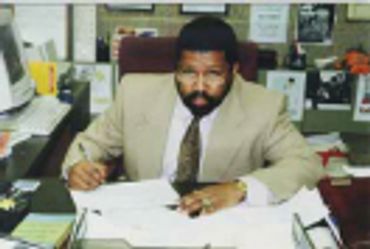
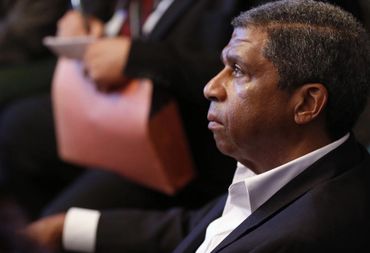
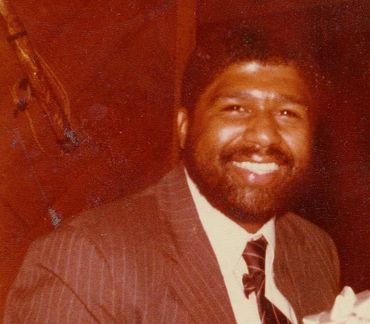
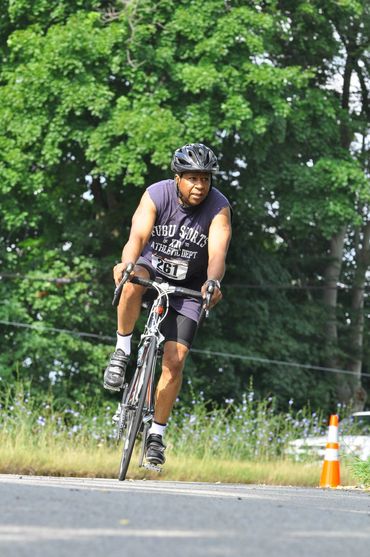

Adult life
In conclusion:
Closing thoughts, epitaphs, and requiem
FYI: More pictures on my Instagram account. More narrative on my Facebook and LinkedIn accounts. Click the taps for social media, race, and God.
Live a good life. If there are gods and they are just, then they will not care how devout you have been but will welcome you based on the virtues you have lived by. If there are gods, but unjust, then you should not want to worship them. If there are no gods, then you will be gone but will have lived a noble life that will live on in the memories of your loved ones. So, I don't know if God exists, but it would be better for his reputation if he didn't.
"Until lions have historians, hunters will be heroes." -Kenyan Proverb
It's hard to win an argument against a smart person, but it's almost impossible to win an argument against a stupid person. So, never argue with stupid people, they will drag you down to their level and then beat you with experience. And never argue with a fool in public, passersby won't know who's who. So, before you try to convince a fool against his will, make certain he doesn't have the same problem.
Avoid bitterness and holding onto regrets. I never lose, I either win or learn. “Holding onto anger is like drinking poison and expecting the other person to die.” So, what can you do? Pick social/political causes that are important to you and consistently fight for them. I've chosen racism, poverty, ecological devastation, and war. But remember, ultimately, the only revenge worth having is living a successful life.
Live, Love, Laugh, Learn, Repeat... I hope to live long and die young.
You’re going to realize it one day — that happiness was never about your job, your degree, or being in a relationship. Happiness was never about following in the footsteps of all those who came before you; it was never about being like the others, or worshipping so-called Gods.
One day, you’re going to see it — that happiness was always about discovery, hope, listening to your heart, living with awe and following it wherever it chose to go. Happiness was always about being kinder to yourself; it was always about embracing the person you were becoming.
One day, you will understand that happiness was always about learning how to live with yourself, and that happiness was never in the hands of other people. It was always about you.
A Gentle Reminder: This life will go by fast. Don't fight with people, don't criticize your body so much, don't complain so much. Don't lose sleep over material things. Recognize the person that makes you happy. If you make a mistake, let it go and keep seeking your happiness. Never stop being a good person. Don't worry so much about buying things you can't afford, with money you don't have, to impress people that don't like you. Don't kill yourself trying to leave an inheritance for others. Those benefits should be earned by each person, so don't dedicate yourself to accumulating money. Travel, enjoy your journeys, see new places, and give yourself the pleasures you deserve. Allow dogs to get closer. Don't put away the fine glassware. Utilize the new dinnerware; don't save your favorite fragrance, use it to go out with yourself; wear out your favorite sports shoes; repeatedly wear your favorite clothes. Live in the present.
Why not forgive now? We wait so long for holidays, for Friday, for reunions, for another year, for when I have money, for love to come, for everything to be perfect. Look, perfection doesn't exist. Here is an opportunity to learn. So take this challenge that is life and do it now.
love more, forgive more, embrace more, love more intensely. Start with loving and forgiving yourself. Stay away from toxicity. To avoid unhappiness, anxiety, and depression, we need to control those things that are within our power and be indifferent or apathetic to those things which are not. Don't worry about the future, don't regret the past, but live in the present. Expect less, and stay grateful. “I cried because I had no shoes until I met a man who had no feet.” We allow our happiness to be stolen from us when what we think we desire is not aligned with what we might think is reality. Be careful of what you wish for, and remember, one hundred years from now, none of this will matter. Don't worry about tomorrow, and don't regret yesterday. Live, love, and be grateful for this very moment.
The mathematical formula for happiness is very simple. It's (t)=w0+w1∑j=1tγt−jCRj+w2∑j=1tγt−jEVj+w3∑j=1tγt−jRPEj. Ok, mathematically challenged, are you? The Happiness Equation in words is: your happiness is equal to or greater than the difference between the events of your life and your expectations. Be mindful, that “events” are subject to your perception, values, and vision at the present time only.
My dear ole' dad, who I will always love, was my best friend in life. He taught me well by modeling, to be true to myself. And he taught me, there is so much good in the worst of us, and so much bad in the best of us, that it hardly behooves any of us, to talk about the rest of us! He taught me how to be a compassionate man with integrity, how to be generous with praise, and parsimonious with judgment. For, the virtuous and the wicked are just exchanging notes. Every good person has a past and every bad person has a future.
Eat half, walk double, laugh triple, and love without measure! Life is short, so live your life, be happy and keep smiling. Just live for yourself and before you speak, listen. Before you write, think. Before you spend, earn. Before you meditate, forgive. Before you hurt, feel. Before you hate, love. Before you quit, try and Before you die, live.
"To be a writer you must write; to be a good writer you must read." Dr. MAVA
I want to die young as late as possible.
Life is short...break the rules, forgive quickly, kiss slowly, love truly, laugh uncontrollably, and never regret anything that made you smile!
All that lives will die, and nothing is everlasting. But, our inevitable death is not the worse. The worse include the moments spent regretting the past. I never lose, I either win or learn. The worse include the moments spent worrying about the future. I practice acceptance of the things I cannot change. The worse is allowing too much of our brief voyage through space-time to slip away without doing our utmost to give it joy, meaning, and awe.
They will criticize you for what you are, for what you are not, and for what they think you are. They will judge you for what you do, for what you don't do, and for what you fail to do. They will talk about you for what you say and for what you keep silent about. They will point at you for your successes and for your mistakes, for your decisions and for your doubts. No matter how much you try to please, there will always be opinions. So, live for yourself, because in the end, the only thing that matters is being true to your own path.
Dr. MAVA’s EPITAPH - Let the music play!
Manhattan-born, New Jersey-bred;
Studied science, then books he read.
Smoked his stuff;
and drank his wine.
Multi-ethnic womanizer;
human rights sympathizer.
World traveled, well-read;
Late to wed, never bred.
Tried triathlons but no win to boast;
Loved his music, the arts engrossed.
Chased life's dreams with a hopeful cry;
Wished to laugh till the day he'd die.
Now at Mt. Freedom dead;
much good, some ill, he did.
So, hope all's even, you that survive;
For if you're getting this, you're still alive.
May you be happy, and live with ease;
for everyone, you will never please.
For only the actions of the just;
Smell sweet and blossom in the dust.
REQUIEM: To Deb: Thanks for being the love of my life, but for also being my best friend till the end.
And, as the Chief Rocker, Frankie Crocker from NY radio WBLS (1972-09) would say, signing off at 8:00 PM,
“I hope you live to be 100, but me, one hundred but minus a day, so I’ll never know that nice people like you have passed away.”
I'm in the mood for love
Simply because you're near me.
Funny, but when you're near me
I'm in the mood for love.
Heaven is in your eyes
Bright as the stars we're under
Oh! Is it any wonder
I'm in the mood for love?
Why stop to think of whether
This little dream might fade?
We've put our hearts together
Now we are one,
I'm not afraid!
If there's a cloud above
If it should rain, we'll let it
But for tonight, forget it!
I'm in the mood for love
King Pleasure - I'm In The Mood For Love (aka Moody's Mood For Love)
